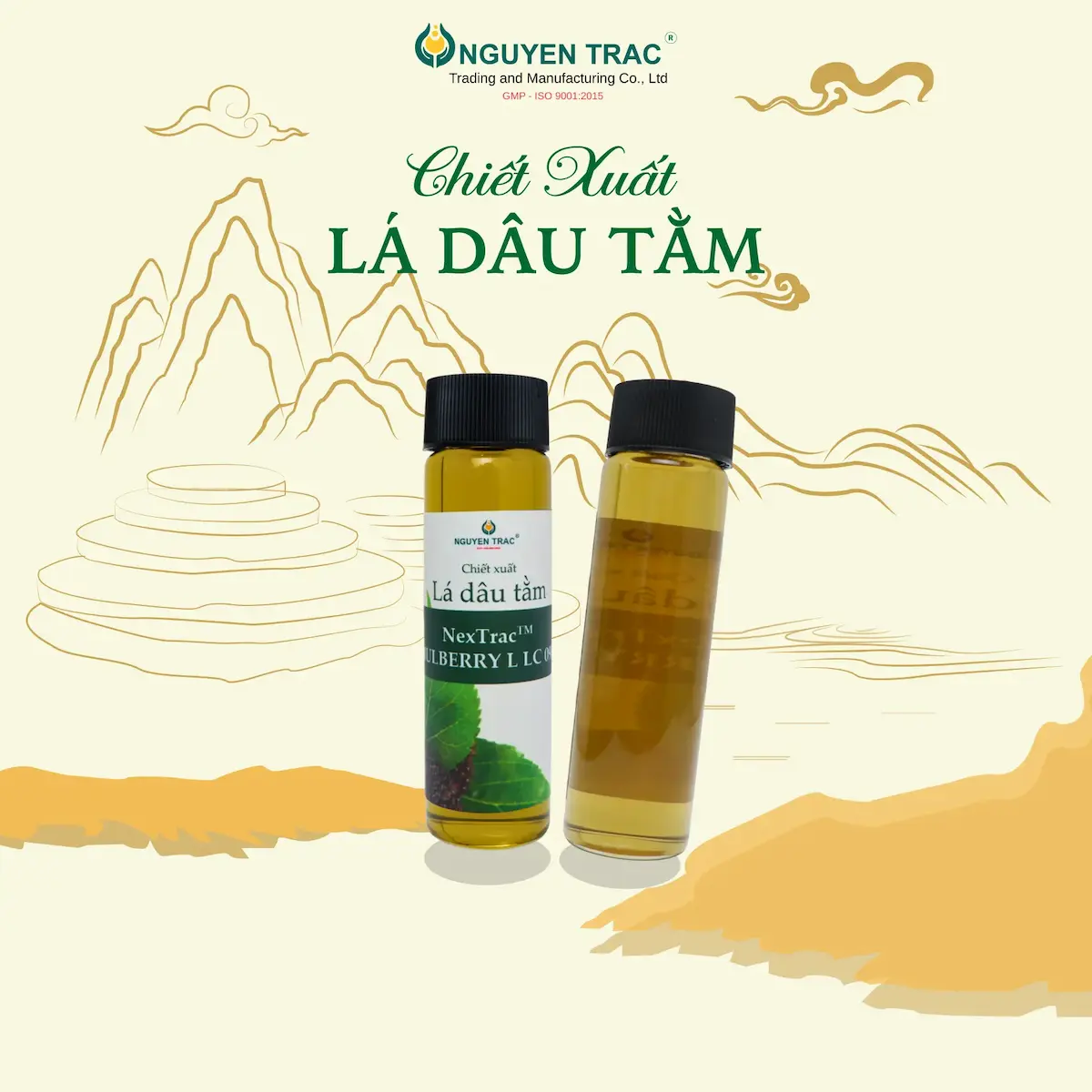
MULBERRY LEAF EXTRACT - NexTrac® MULBERRY L LC
INCI Name: Morus Alba Leaf Extract, Glycerin, Butylene Glycol, Aqua, 1,2-Hexanediol
Trade Name: NexTrac® MULBERRY L LC
Product Category: extract
CAS Number: N/A
Introduction to Mulberry Leaf Extract
Mulberry leaf extract (Morus alba Leaf Extract) is obtained from the leaves of the mulberry tree (Morus alba L.), a plant belonging to the Moraceae family that is widely cultivated in Asian countries such as China, Japan, South Korea, and Vietnam. Mulberry leaves have long been used in traditional medicine to support health and well-being. With the growing interest in naturally derived ingredients, mulberry leaf extract is gaining attention in the cosmetics industry for its rich bioactive composition and potential applications in skin care.
In terms of chemical composition, mulberry leaves contain various valuable compounds, including flavonoids, polyphenols, phenolic acids, and other natural antioxidants [1][3][4]. These constituents contribute to the extract’s biological activities and provide an important basis for research into its cosmetic applications. With its diverse composition, mulberry leaf extract is considered a promising botanical ingredient for protecting and maintaining skin health.
Notable biological activities of mulberry leaf extract include antioxidant activity, anti-inflammatory potential, and inhibition of the enzymes tyrosinase and hyaluronidase. These properties suggest potential applications in products designed to support skin brightening, address signs of aging, protect against oxidative stress, and care for sensitive skin. Its natural origin and beneficial bioactive compounds also make mulberry leaf extract an ingredient of interest in the development of plant-based cosmetics.
Key Benefits Of Mulberry Leaf Extract
Antioxidant Activity
Antioxidant activity is one of the most notable benefits of mulberry leaf extract. This activity is closely associated with its flavonoid and polyphenol content, which helps scavenge free radicals, protect cells from oxidative stress, and slow the skin aging process [1][2].
Anti-aging Benefits
Mulberry leaf extract can inhibit hyaluronidase, helping limit the breakdown of hyaluronic acid in the extracellular matrix and thereby supporting skin hydration and elasticity [1].
Anti-inflammatory and Skin-soothing Properties
Mulberry leaf extract reduces the expression of pro-inflammatory cytokines, including TNF-α, IL-1β, and IL-6, while also alleviating oxidative stress [3].
This anti-inflammatory activity suggests that the extract may help soothe the skin and support sensitive skin care.
Skin Brightening
Mulberry leaf extract can inhibit tyrosinase, an enzyme that plays a key role in melanin synthesis. This gives the ingredient potential to support skin brightening and reduce pigment formation [1][4].
Cosmetic Applications
Mulberry leaf extract is commonly incorporated into cosmetic formulations such as:
- Anti-aging serums
- Skin-brightening creams
- Face masks
- Skin care essences
REFERENCES
[1] Chaiyana, W., Sirithunyalug, J., Somwongin, S., Punyoyai, C., Laothaweerungsawat, N., Marsup, P., Neimkhum, W., & Yawootti, A. (2020). Enhancement of the Antioxidant, Anti-Tyrosinase, and Anti-Hyaluronidase Activity of Morus alba L. Leaf Extract by Pulsed Electric Field Extraction. Molecules, 25(9), 2212.
[2] Kim, D. S., Kang, Y. M., Jin, W. Y., Sung, Y. Y., Choi, G., & Kim, H. K. (2014). Antioxidant activities and polyphenol content of Morus alba leaf extracts collected from varying regions. Biomedical Reports, 2(5), 675–680.
[3] Leyva-Jiménez, F. J., Ruiz-Malagón, A. J., Molina-Tijeras, J. A., Diez-Echave, P., Vezza, T., Hidalgo-García, L., Lozano-Sánchez, J., Arráez-Román, D., Cenis, J. L., Lozano-Pérez, A. A., Rodríguez-Nogales, A., Segura-Carretero, A., & Gálvez, J. (2020). Comparative Study of the Antioxidant and Anti-Inflammatory Effects of Leaf Extracts from Four Different Morus alba Genotypes in High Fat Diet-Induced Obesity in Mice. Antioxidants, 9(8), 733.
[4] Jeong, J. Y., Liu, Q., Kim, S. B., Jo, Y. H., Mo, E. J., Yang, H. H., Song, D. H., Hwang, B. Y., & Lee, M. K. (2015). Characterization of Melanogenesis Inhibitory Constituents of Morus alba Leaves and Optimization of Extraction Conditions Using Response Surface Methodology. Molecules, 20(5), 8730–8741.
Product Information
- Origin: Vietnam
- Status: In stock
Related Products