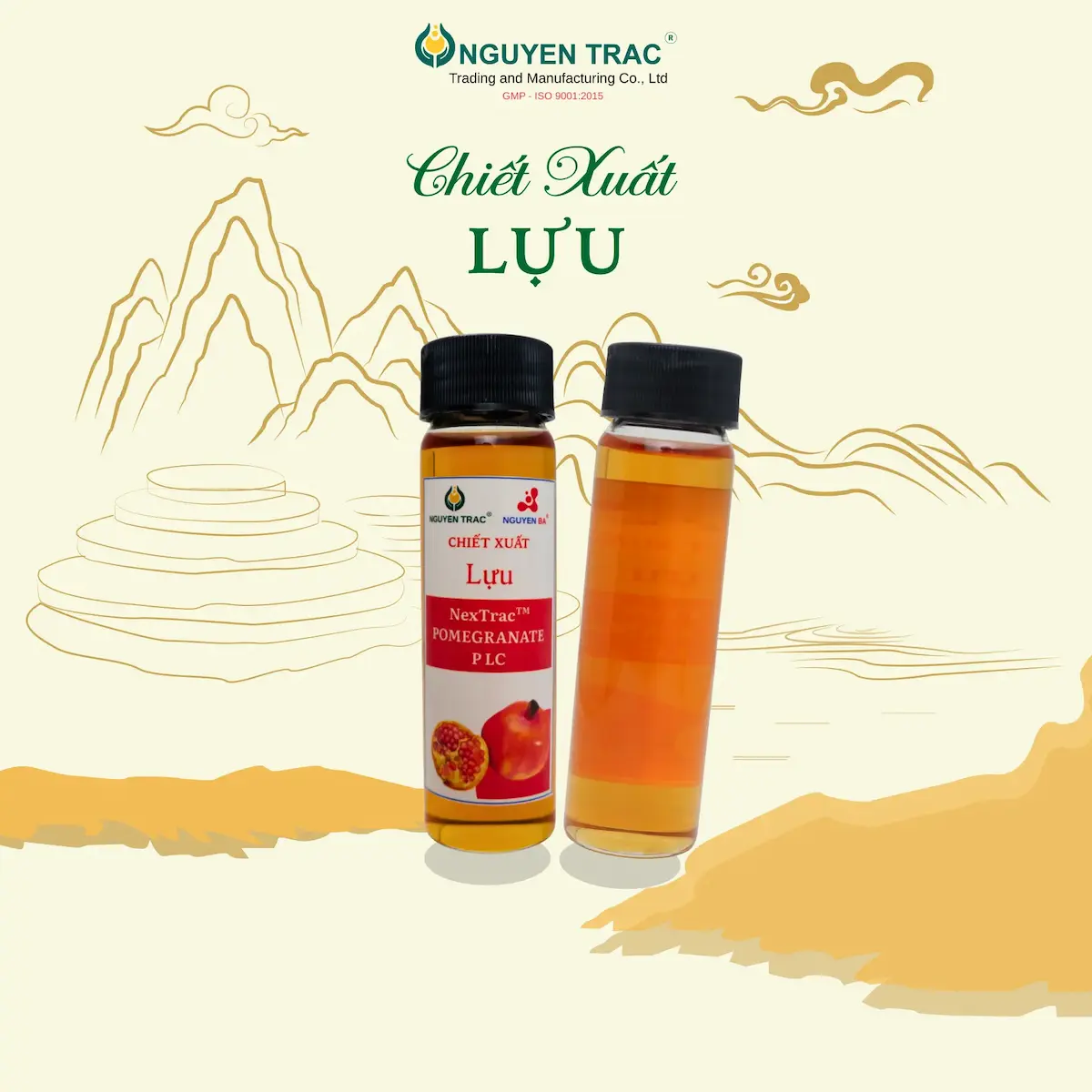
POMEGRANATE EXTRACT - NexTrac™ POMEGRANATE P LC
INCI Name: Punica Granatum Peel Extract, Aqua, Glycerin
Trade Name: NexTrac™ POMEGRANATE P LC
Product Category: extract
CAS Number: N/A, 7732-18-5, 56-81-5
Introduction to Pomegranate Extract
Pomegranate peel extract (Punica granatum Peel Extract) is obtained from the outer peel of the pomegranate fruit (Punica granatum L.), a plant belonging to the Lythraceae family. Pomegranate originates from Western Asia and the Mediterranean region but is now widely cultivated in countries such as India, China, Iran, Turkey, Spain, and Vietnam. The fruit has long been used in food and traditional medicine for its nutritional value and beneficial biological properties. During the production of juices, dietary supplements, and other pomegranate-based products, the peel typically accounts for approximately 30–50% of the fruit’s weight and is considered an agricultural by-product. However, modern research indicates that the peel contains the highest concentration of bioactive compounds within the fruit, offering considerable potential for pharmaceutical and cosmetic applications.
Phytochemical studies have shown that pomegranate peel is a rich source of valuable bioactive compounds, particularly phenolic acids, ellagitannins, and flavonoids [3]. Its combination of antioxidant, anti-inflammatory, skin-repairing, and antibacterial properties has positioned pomegranate peel extract as one of the most valuable natural ingredients derived from fruit and vegetable processing by-products. It is increasingly attracting interest in the development of multifunctional skin care products.
With its natural origin, rich bioactive composition, and relatively favorable safety profile, pomegranate peel extract is incorporated into various cosmetic products, including antioxidant serums, anti-aging creams, skin recovery products, formulations targeting dark spots and hyperpigmentation, and acne-care products. Utilizing bioactive-rich agricultural by-products such as pomegranate peel not only increases the economic value of crops but also aligns with the growing focus on sustainability and green cosmetics in the global cosmetics industry.
Key Benefits
Antioxidant Activity
Antioxidant activity is the most well-documented benefit of pomegranate peel extract. Its high polyphenol content helps neutralize reactive oxygen species (ROS), limit lipid peroxidation, and protect proteins and DNA in skin cells against the effects of ultraviolet radiation and environmental pollution [1][2][3].
Through these mechanisms, pomegranate peel extract helps reduce premature skin aging, maintain elasticity, and strengthen the skin’s natural defenses.
Anti-aging Benefits
One of the key contributors to skin aging is the breakdown of collagen and elastin by matrix metalloproteinases (MMPs). Polyphenols in pomegranate peel can inhibit the expression of MMP-1, MMP-3, and MMP-9, limit collagen degradation, and stimulate fibroblasts to increase new collagen synthesis, helping maintain the density and elasticity of connective tissue [1][3].
These properties support the extract’s widespread use in anti-wrinkle, firming, and anti-aging products.
Anti-inflammatory and Skin-soothing Properties
Pomegranate peel extract can modulate inflammatory responses by inhibiting the activation of NF-κB and MAPK signaling pathways. This reduces the expression of pro-inflammatory cytokines such as TNF-α, IL-1β, and IL-6, as well as inflammation-related enzymes, including COX-2 and iNOS. These effects are associated with bioactive constituents such as ellagic acid, gallic acid, punicalagin A, and punicalagin B present in the extract [1][3].
Through these properties, the extract helps reduce redness, irritation, and mild inflammation while supporting skin barrier recovery following environmental exposure or skin treatment procedures.
Support for Skin Recovery and Regeneration
Pomegranate peel extract promotes re-epithelialization by stimulating fibroblast proliferation, increasing collagen synthesis, and supporting granulation tissue formation. Its polyphenolic compounds also help reduce oxidative stress at damaged sites, creating favorable conditions for tissue recovery and improved skin barrier function [2][3].
The ingredient is therefore commonly incorporated into products designed to support skin recovery and care for damaged skin.
Antibacterial Activity and Support for Acne Prevention
Pomegranate peel extract can inhibit the growth of various microorganisms associated with skin infections due to its high tannin and polyphenol content. The extract exhibits activity against both Gram-positive and Gram-negative bacteria, particularly those associated with skin inflammation and acne, such as C. acnes [1][2]. Its anti-inflammatory properties also help reduce the swelling and redness associated with acne lesions, supporting the care of oily and acne-prone skin.
Support for Improved Skin Tone
Ellagic acid has been extensively studied for its ability to regulate melanin production. It may inhibit tyrosinase activity, reduce melanin synthesis, and help limit post-inflammatory hyperpigmentation, contributing to a more even skin tone and improving the appearance of dull areas [1].
Image
Cosmetic Applications
Pomegranate extract is commonly incorporated into cosmetic formulations such as:
- Creams
- Serums
- Lotions
- Body washes
- Facial cleansers
References
[1] Dimitrijevic, J., et al. (2024). Punica granatum L. (Pomegranate) Extracts and Their Effects on Healthy and Diseased Skin. Pharmaceutics, 16(4), 458.
[2] Singh, J., Kaur, et al. (2023). Pomegranate Peel Phytochemistry, Pharmacological Properties, Methods of Extraction, and Its Application: A Comprehensive Review. ACS Omega, 8(39), 35452–35469.
[3] Pons-Rocamora, N., et al. (2026). Dermocosmetic Potential of Punica granatum: A Systematic Review of Bioactive Compounds and Skincare Applications. Antioxidants, 15(3), 332.
Product Information
- Origin: Vietnam
- Status: In stock
Related Products