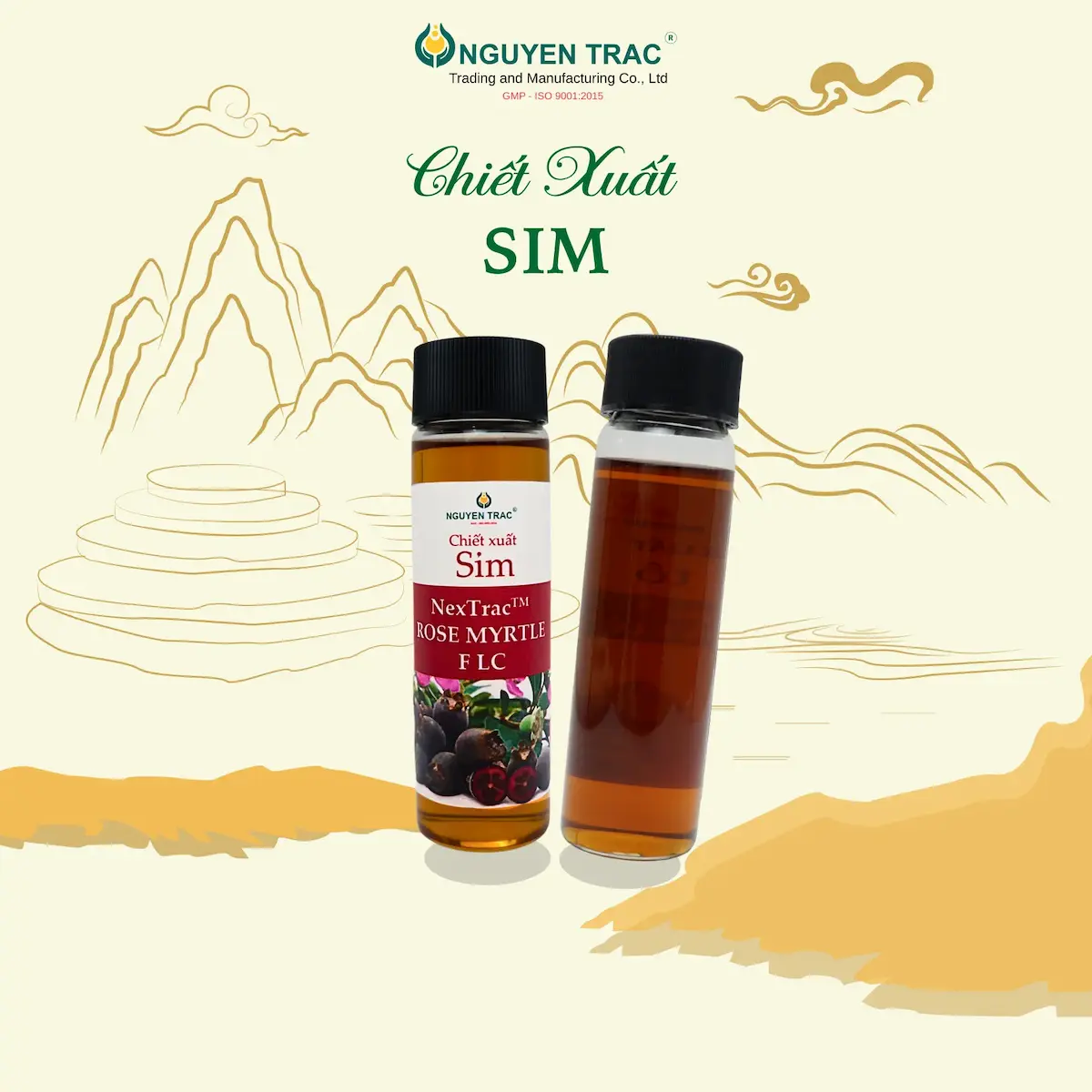
ROSE MYRTLE EXTRACT - NexTrac™ ROSE MYRTLE F LC
INCI Name: Rhodomyrtus Tomentosa Fruit Extract, Aqua, Glycerin, Ethoxydiglycol, 1,2-Hexanediol
Trade Name: NexTrac™ ROSE MYRTLE F LC
Product Category: extract
CAS Number: 7732-18-5, 56-81-5, 111-90-0, 6920-22-5
Introduction
Rose Myrtle extract is derived from Rhodomyrtus tomentosa, a botanical species rich in bioactive compounds. It is used in cosmetic formulations for its antioxidant properties and ability to help protect the skin against environmental stressors. Belonging to the Myrtaceae family, the plant commonly grows wild in hilly and mountainous regions and is widely distributed across Southeast Asian countries, including Vietnam, Laos, Thailand, Malaysia, and the Philippines.
Different parts of the rose myrtle plant contain valuable compounds such as triterpenoids, polyphenols, essential fatty acids, vitamins, and minerals. Rose myrtle fruit is particularly rich in naturally occurring polyphenols, including flavonoids, tannins, phenolic acids, ellagitannins, stilbenes, anthocyanins, and flavonols [1].
Owing to its diverse bioactive composition, rose myrtle extract is considered a promising ingredient for cosmetic formulations designed to provide antioxidant protection, soothe the skin, support the skin barrier, and promote skin comfort. It is particularly suitable for naturally derived and botanical cosmetics that require a balance between efficacy and gentleness.
KEY COSMETIC BENEFITS OF ROSE MYRTLE EXTRACT
Antioxidant Activity and Protection Against Environmental Stressors
The phenolic compounds present in rose myrtle extract are known for their antioxidant properties, which are associated with their aromatic rings and hydroxyl groups. These structural characteristics enable phenolic compounds to participate in free-radical neutralization, thereby helping protect the skin against oxidative stress. A study by Zhao et al. (2017) demonstrated that the antioxidant activity of rose myrtle fruit extract was directly associated with its phenolic and flavonoid content [1].
In cosmetic applications, these antioxidant properties make rose myrtle extract suitable for products formulated for dull-looking skin and skin exposed to pollution, UV radiation, and other environmental stressors. The ingredient may help maintain a healthy-looking complexion, reduce the appearance of premature aging, and preserve the skin’s natural radiance.
Antibacterial Activity
Rose myrtle extract has demonstrated antibacterial activity, particularly against the Gram-positive bacterium Staphylococcus aureus. This activity supports its potential use in skincare products designed to cleanse and protect the skin surface while helping maintain a balanced skin environment [1].
Skin-Soothing and Skin Barrier Support
Rose myrtle extract is rich in polyphenols and anthocyanins, which may help protect the skin against environmental aggressors. Frequent exposure to pollution, sunlight, fine particulate matter, and weather changes can weaken the skin barrier, increase moisture loss, and reduce the skin’s natural recovery capacity.
Through its antioxidant, mildly astringent, and tissue-protective properties, rose myrtle extract may help reinforce the skin barrier, maintain hydration, and promote a more balanced and comfortable skin condition. The ingredient is suitable for formulations designed for sensitive, irritation-prone, dull-looking, or environmentally stressed skin requiring additional recovery support [1].
COSMETIC APPLICATIONS OF ROSE MYRTLE EXTRACT
Rose myrtle extract can be incorporated into a variety of skincare, body care, and cleansing formulations. Rich in polyphenols, flavonoids, anthocyanins, and other bioactive phytochemicals, it is suitable for products designed to provide antioxidant protection, soothe the skin, support skin defense, and cleanse the skin surface.
REFERENCES
[1] Dương, T. T., Trần, T. H. N., Tạ, T. T., & Nguyễn, V. K. G. (2025). Nghiên cứu hoạt tính chống oxy hóa, kháng khuẩn, kháng nấm của các phân đoạn dịch chiết quả sim (Rhodomyrtus tomentosa). Tạp chí Khoa học và Công nghệ Đại học Duy Tân, 6(73), 39-48.
Product Information
- Origin: Vietnam
- Status: In stock
Related Products