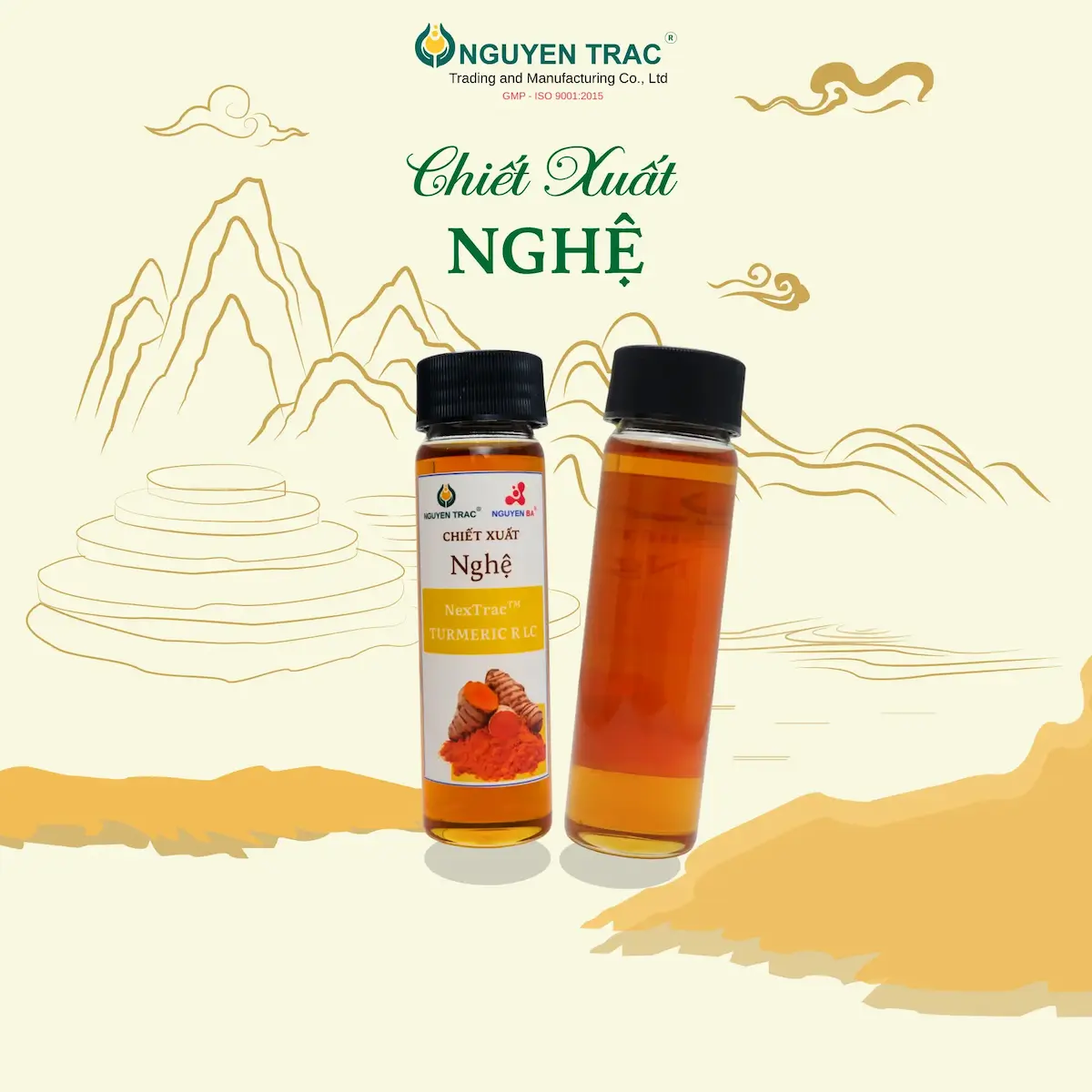
TURMERIC EXTRACT - NexTrac® TURMERIC R LC
INCI Name: Curcuma Longa Root Extract, PEG-400
Trade Name: NexTrac® TURMERIC R LC
Product Category: extract
CAS Number: N/A, 25322-68-3
INTRODUCTION
Turmeric extract (Curcuma longa L.) is a botanical ingredient obtained from the rhizome of the turmeric plant, which belongs to the Zingiberaceae family. In cosmetics, this ingredient is valued for its rich naturally derived chemical composition, primarily comprising polyphenols and polysaccharides. Among these constituents, curcuminoids—including curcumin and its derivatives—are considered the characteristic bioactive compounds of turmeric [1][2].
The active compounds found in turmeric extract have been associated with various skincare benefits. Curcuminoids participate in antioxidant mechanisms by neutralizing free radicals, thereby helping reduce oxidative stress in the skin. These compounds have also been studied for their role in modulating inflammatory responses through their effects on biological signaling pathways involved in inflammation. Furthermore, turmeric extract shows potential in helping control microbial proliferation on the skin and supporting tissue repair by promoting cellular regeneration and improving the skin microenvironment.
Owing to these properties, turmeric extract is commonly incorporated into skincare products formulated for sensitive, dull-looking, prematurely aging, and compromised skin requiring additional recovery support.

KEY BENEFITS
Antioxidant Activity
Curcuminoids, particularly curcumin, can neutralize reactive oxygen species (ROS) through electron-donating mechanisms and the inhibition of lipid peroxidation. These activities help reduce oxidative stress in the skin, thereby limiting premature aging and cellular damage [1][2].
Anti-Inflammatory and Skin-Soothing Activity
Curcuminoids can inhibit NF-κB activation and reduce the expression or production of COX-2, TNF-α, IL-1β, IL-6, and nitric oxide (NO). Through these mechanisms, turmeric extract may help alleviate skin redness, irritation, and inflammatory responses while supporting the skin barrier.
Clinical studies and systematic reviews have reported beneficial effects of turmeric and curcumin preparations on conditions such as acne, dermatitis, psoriasis, and skin irritation [1][2].
Antibacterial Activity
Curcuminoids can disrupt bacterial cell membranes and inhibit the growth of certain skin-associated bacteria. These effects may help reduce the risk of secondary bacterial infection in inflammatory acne and support the cleansing of the skin surface [2].
Wound-Healing Support
Curcumin promotes fibroblast proliferation and modulates inflammatory responses during the tissue-repair phase. These activities may accelerate re-epithelialization, support the wound-healing process, and help reduce the risk of scar formation [3][4].
COSMETIC APPLICATIONS
In cosmetic formulations, turmeric rhizome extract can be incorporated into:
- Moisturizing creams
- Anti-acne creams
- Anti-aging products
REFERENCES
[1] Ahmad, R. S., Hussain, M. B., Sultan, M. T., Arshad, M. S., Waheed, M., Shariati, M. A., Plygun, S., & Hashempur, M. H. (2020). Biochemistry, safety, pharmacological activities, and clinical applications of turmeric: A mechanistic review. Evidence-Based Complementary and Alternative Medicine, 2020, 7656919.
[2] Tian, W. W., Liu, L., Chen, P., et al. (2025). Curcuma longa (turmeric): From traditional applications to modern plant medicine research hotspots. Chinese Medicine, 20, 76.
[3] Parvizi, M. M., Arefkia, A., Dehghan, Y., Salimi, M. A., & Fazelzadeh Haghighi, N. (2025). A scoping review of clinical trials on the efficacy of curcumin and its formulations for wound healing. Journal of Cosmetic Dermatology, 24(12), e70615.
[4] Di Lorenzo, R., Forgione, F., Bernardi, A., Sacchi, A., Laneri, S., & Greco, G. (2023). Clinical studies on topical curcumin. Skin Pharmacology and Physiology, 36(5), 235–248.
Product Information
- Origin: Vietnam
- Status: In stock
Related Products