
HEALTHY HAIR FOR TET – DISCOVER VIETNAMESE HERBAL EXTRACTS
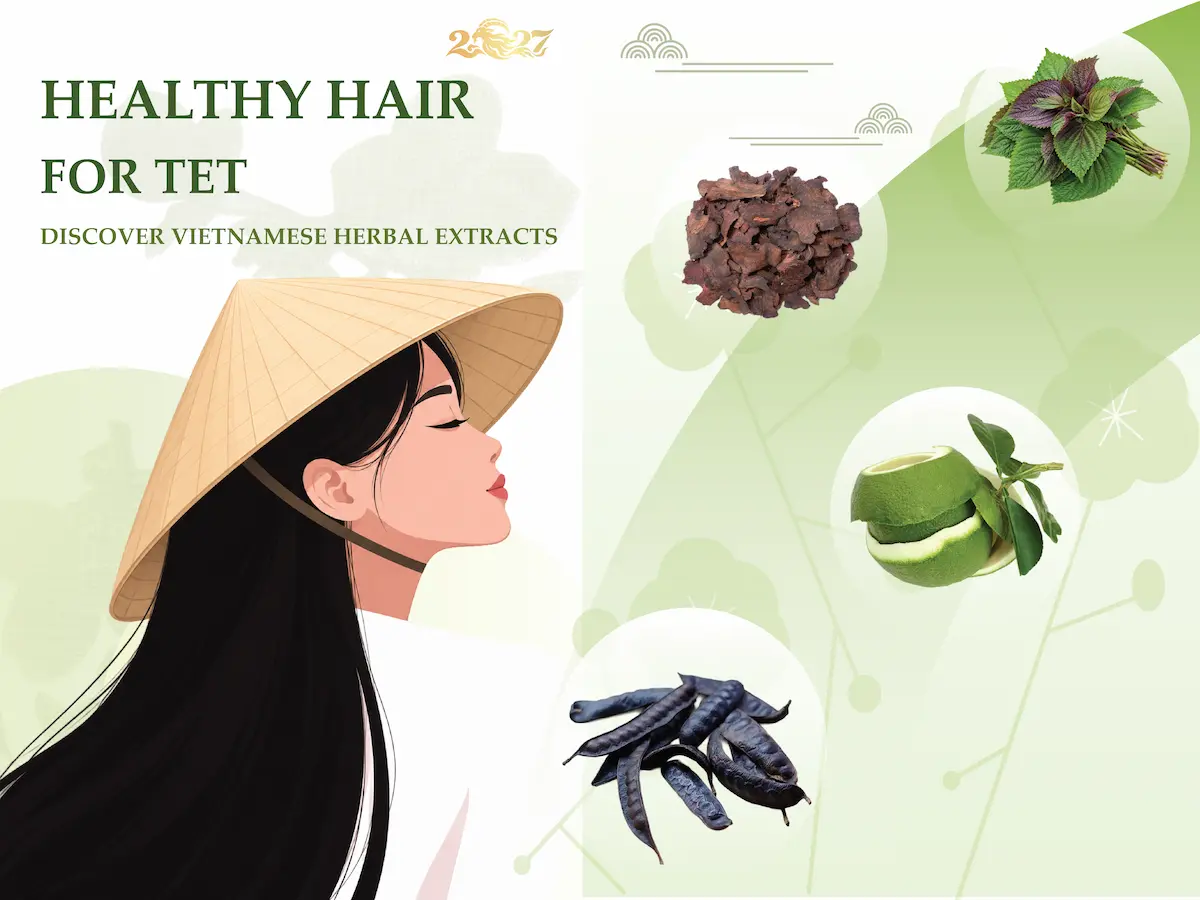
HEALTHY HAIR FOR TET - DISCOVER VIETNAMESE HERBAL EXTRACTS

As the year comes to an end, many people tend to refresh their appearance by dyeing, curling, straightening, or styling their hair in preparation for Tet. These chemical and heat treatments can leave hair dry, dull, and lifeless. Meanwhile, dry weather and irregular daily routines can make the scalp more prone to oiliness and discomfort. As a result, hair and scalp care becomes a growing consumer concern during the festive season, particularly for products featuring naturally derived ingredients that offer a gentle and pleasant user experience.
What Challenges Does Hair Face at the End of the Year?
As Tet approaches, hair is exposed to multiple overlapping factors, each presenting different challenges for product developers:
Styling treatments: Hair dyeing, curling, straightening, blow-drying, and heat styling can leave hair dry, dull, and difficult to manage.
Dry and cool weather: Lower humidity can increase static electricity and make hair more prone to frizz. Meanwhile, scalp dryness and tightness may trigger increased sebum production.
Changes in daily routines: Staying up late, consuming oily foods, travelling, and attending frequent gatherings can contribute to an oily, itchy, and uncomfortable scalp.
Environmental exposure: Fine dust, smoke, and exhaust fumes encountered during Tet shopping, travelling, and spring outings can cause hair to accumulate dirt and lose its style more quickly.
Looking good in photos: With Tet photos and family or social gatherings, consumers want their hair to remain beautiful, shiny, and smooth for days.
These are familiar challenges that explain why hair care products receive greater attention as the year draws to a close.

Scalp Care: From an Additional Step to a Key Focus
In the past, shampoos were often the primary focus when it came to hair cleansing. Today, consumers increasingly recognize the scalp as the foundation of healthy hair, much like the way they care for facial skin. As a result, scalp treatments, serums, and specialized shampoos are gaining attention.
This trend creates opportunities for herbal extracts, as consumers often associate plant-based ingredients with gentle, refreshing, and root-focused care. This is also why herbal extracts are increasingly incorporated into scalp and hair-root care products.
Why Are Vietnamese Herbal Ingredients Attracting Brand Attention?
Sustainable beauty and plant-derived ingredients are reshaping consumer preferences. Beyond reading product benefits on packaging, consumers are increasingly interested in ingredient origins and whether they are familiar, easy to understand, and trustworthy.
In this context, native Vietnamese herbs have a distinct advantage: consumers are already familiar with their appearance, scent, and traditional uses. Ingredients such as Black Locust and Pomelo Peel require little explanation to create a sense of familiarity. Tet is also an ideal occasion, as nostalgia and the desire for a fresh new look come together, allowing culturally inspired products to connect more naturally with consumers.
Beyond their cultural value, these familiar ingredients offer inspiration for developing modern hair care solutions. Let's explore 9 Vietnamese herbal extracts with promising applications in hair care formulations.
Black Locust - Traditional Herbal Inspiration for Hair Cleansing
When it comes to traditional herbal hair care, Black Locust is almost always one of the first ingredients that comes to mind. Black Locust fruit contains natural saponins, a group of compounds known for their foaming and cleansing properties, which have long been used in traditional hair-washing practices.
Black Locust Extract is worth considering when developing herbal shampoos, products inspired by traditional Vietnamese hair care practices, or plant-derived cleansing formulations.
Its presence also allows brands to highlight a familiar botanical ingredient while creating a distinctive identity for their hair care product lines.

Fleeceflower - A Traditional Herbal Ingredient Associated with Dark, Healthy Hair
In traditional herbal remedies and hair care practices, Fleeceflower is commonly associated with dark, thick, and strong-looking hair. This herb has long been used in folk traditions to care for dull, thin, and sparse hair.
In modern cosmetics, Fleeceflower Extract offers two notable application directions: supporting hair growth and helping maintain dark hair. This makes it suitable for developing shampoos, conditioners, and hair treatments targeting thicker, healthier-looking hair while maintaining its natural dark and glossy appearance.

Eclipta Alba, Oriental Arborvitae and Mulberry Root - Nourishing Hair Roots and Supporting Healthy Hair Growth
Traditionally used in herbal hair care practices, these three extracts are particularly relevant to the needs of consumers with thin, weak, and easily falling hair.
Eclipta Alba Extract: A familiar ingredient in traditional hair care remedies, attracting attention for its potential to support thicker and healthier-looking hair.
Oriental Arborvitae Extract: Traditionally associated with hair fall care, making it a suitable ingredient to explore for supporting hair growth.
Mulberry Root Extract: A plant-derived ingredient with potential applications in hair-root nourishing formulations, helping support healthy hair follicle development.
These extracts can be combined to develop products featuring the concept of "Stronger Hair – Nourishment from the Roots", such as herbal shampoos, conditioners, and scalp treatments.
Green Tea and Perilla - Scalp Care During Changing Weather Conditions
In a hair care routine, the scalp deserves just as much attention as the hair itself, especially during seasonal transitions when changing weather conditions can make the scalp oily, itchy, and uncomfortable.
Green Tea Extract contains polyphenols, particularly catechins and EGCG. These compounds are recognized for their antioxidant properties, making the extract suitable for incorporation into scalp care formulations.
Perilla Extract contains phenolic compounds such as rosmarinic acid, which may help regulate scalp oil production, reduce dandruff, and improve hair fall conditions. It is a promising option for products designed to provide a gentle scalp care experience.
Both extracts can be incorporated into formulations to help maintain a comfortable and healthy scalp during periods of changing weather.
Pomelo Peel - A Familiar Fragrance and a Distinctive Tet Touch
The fragrance of Pomelo Peel often brings back memories of traditional herbal hair-washing preparations and familiar hair care practices passed down through generations of Vietnamese families.
Today, this traditional inspiration can be incorporated into cosmetic formulations through two ingredient forms:
Pomelo Peel Extract: Provides flavonoids that may help stimulate blood circulation beneath the scalp, nourish hair follicles, reduce hair fall, and support new hair growth.
Pomelo Essential Oil: Captures the distinctive fragrance of pomelo peel, adding an aromatic touch and enhancing the sensory experience of hair care products. It may also help stimulate scalp circulation, reduce hair breakage, and support natural hair growth.

From Cleansing to Nourishment: How to Combine Herbal Extracts
One advantage of these herbal extracts is their flexibility. They can be used individually or combined according to specific hair care objectives. Some potential formulation directions include:
Gentle cleansing: Combine Black Locust Extract with Pomelo Peel Extract and Pomelo Essential Oil to create a gentle cleansing experience with a refreshing fragrance inspired by Tet.
Hair-root nourishment: Combine Eclipta Alba, Oriental Arborvitae, Fleeceflower, and Mulberry Root Extracts for conditioners, hair masks, or shampoos targeting stronger, healthier-looking hair.
Intensive scalp care: Green Tea, Perilla, and Mulberry Root Extracts are suitable for scalp treatments and serums designed for dry and changing weather conditions.
Fragrance experience: Pomelo Essential Oil can be incorporated into hair mist formulations to provide a distinctive fragrance.
These combinations demonstrate how a range of botanical ingredients can support multiple stages of hair care, from cleansing and conditioning to specialized scalp care.
Herbal Extracts in Formulations: Key Technical Considerations
Incorporating natural extracts into cosmetic formulations involves more than selecting ingredients that match a product's positioning. Several technical factors should also be considered to ensure a pleasant user experience and long-term product stability:
Colour and fragrance: Herbal extracts often have characteristic colours and scents that may affect the sensory properties of finished products. A balance should be maintained between their natural characteristics and the overall fragrance profile.
Stability: Product colour, clarity, and viscosity should be monitored over time and under different storage temperature conditions.
Formulation compatibility: Factors such as pH, surfactant systems, and preservation systems should be considered to ensure that the extracts perform as intended without affecting the product's texture and structure.
Ingredient documentation: Technical Data Sheets (TDS), ingredient origins, and quality standards provide an important foundation for brands to develop transparent and reliable product claims.
Tet Hair Care: Simple Tips for Keeping Hair Looking Its Best
Alongside choosing suitable hair care products, a few simple habits can help keep hair and scalp comfortable during the busy festive season:
- Wash hair appropriately and avoid excessively hot water: Hot water can further dry out the scalp and hair, especially in dry weather.
- Moisturize hair regularly: Conditioners, hair masks, and nourishing treatments help keep hair soft and smooth, particularly after dyeing or curling.
- Limit frequent heat styling: When using blow-dryers or straighteners, choose moderate temperatures and combine them with heat-protectant products.
- Keep the scalp clean and fresh: Especially after spending time outdoors, being exposed to dust and pollution, or consuming oily foods.
- Get enough sleep and stay hydrated: Overall health also plays an important role in maintaining healthy-looking hair.
Conclusion
In Vietnamese tradition, washing with herbal ingredients has long symbolized leaving the old behind and welcoming the new. This familiar cultural practice is no longer just a memory; it can also inspire modern hair care formulations that meet evolving consumer expectations while retaining a sense of familiarity.
Looking at these 9 extracts, each ingredient offers a distinct role. They can be used individually or combined according to product positioning, from shampoos and conditioners to specialized scalp treatments. With their diverse botanical compounds and versatile applications, Vietnamese herbal extracts can support various stages of hair and scalp care, not only during the spring festive season but throughout the year, helping maintain shiny, healthy, and beautiful hair every day.