A guide to brighter skin for Tet holiday with natural extracts
A Guide to Brighter Skin for Tet Holiday with Natural Extracts
As the year draws to a close, skincare needs tend to increase as many women seek a brighter, more even-looking complexion for the Tet holiday. Changes in daily routines, late nights, and frequent makeup application during this period can also leave skin looking dull and tired. This has driven greater interest in skin-brightening products, particularly those formulated with naturally derived ingredients that are gentle and help minimize the risk of irritation.
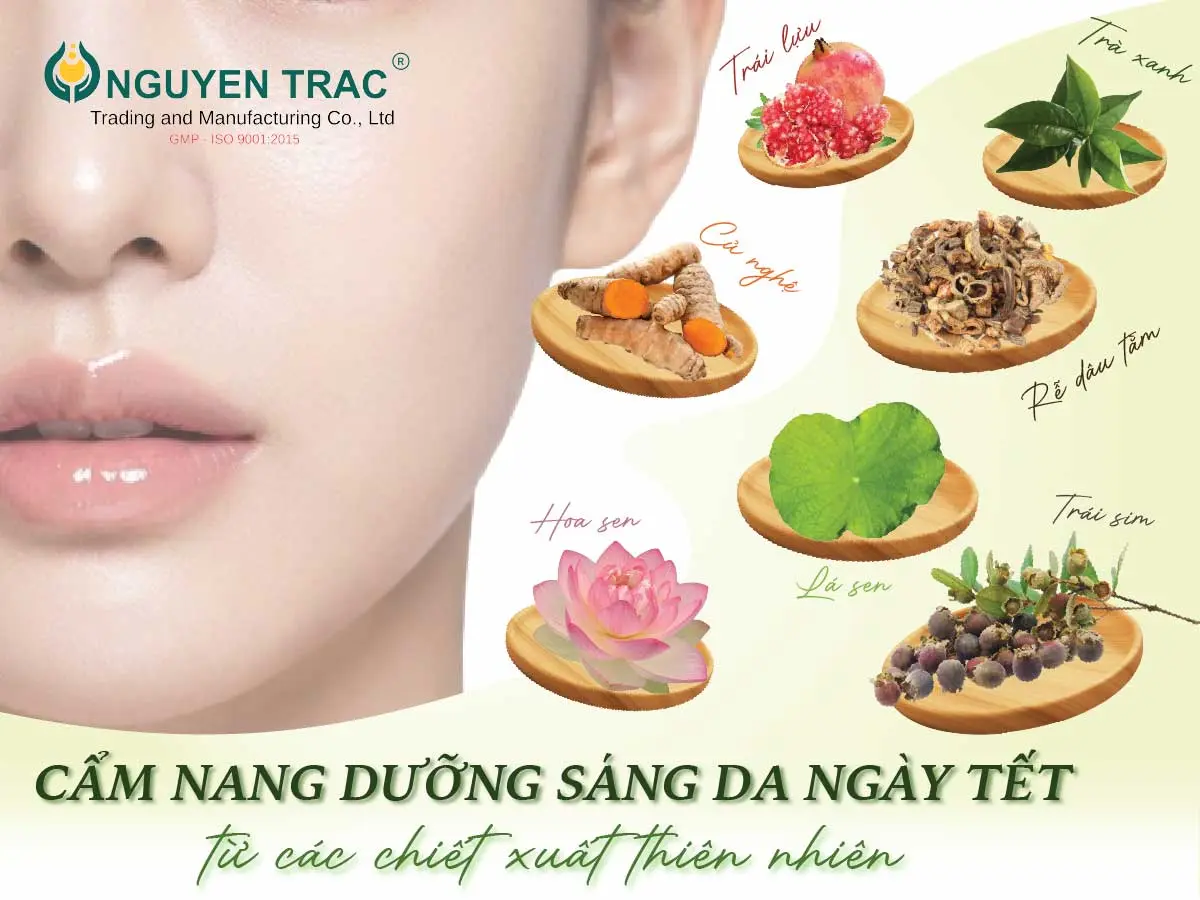
Achieving a fresh, even-looking complexion involves more than simply choosing a brightening product. Consistent skincare, sun protection, and maintaining a healthy skin barrier are equally important. Botanical extracts such as pomegranate, lotus flower, mulberry, green tea, lotus leaf, rose myrtle, turmeric, and mangosteen peel can be incorporated into skin-brightening formulations as supporting ingredients, depending on the product's intended benefits and formulation system.
Factors That Cause Dullness and Dryness During the Tet Season
The final days of the year are often busier than usual, with cleaning, shopping, party preparations, and family visits. As a result, skin may become dry and tight, excessively oily, or appear duller than usual.
Sometimes, a lack of radiance is not simply due to the absence of a brightening product. Staying up late, spending long hours in air-conditioned environments, drinking insufficient water, exposure to dust and sunlight, and inadequate makeup removal can all affect the appearance of the skin. Some people may also notice lingering post-acne marks. Areas frequently exposed to sunlight may become darker than those that are regularly covered.
These skin concerns do not all have the same underlying causes, so no single product can address every issue. Skin brightening should be understood as a process of caring for the skin to help it look fresher and more even-toned over time, rather than achieving rapid whitening or changing its natural skin tone.
Tet is also a time when many people wear makeup more frequently. Inadequate makeup removal may leave sunscreen or makeup residue on the skin. On the other hand, excessive scrubbing can cause dryness and irritation. A simple daily routine maintained consistently is often more beneficial than a multi-step regimen that is difficult to follow.
Skin Brightening Starts with a Healthy Skin Barrier
Before looking for ingredients that may improve the appearance of uneven skin tone, take a moment to assess your skin's current condition. Is your skin dry, irritated, peeling, persistently stinging, or developing rashes after using a new product? If so, prioritize soothing the skin and strengthening its protective barrier while temporarily discontinuing products that cause discomfort. When the skin barrier is compromised, introducing additional brightening products may increase the risk of irritation.
A basic skincare routine can include gentle cleansing, moisturizing, and daytime sun protection. In the evening, remove makeup and cleanse with a facial cleanser suitable for your skin type, followed by moisturizer. Avoid vigorous scrubbing to remove dark spots, as these actions may make the skin more sensitive. If you are using topical medications or undergoing dermatological treatment, consult a healthcare professional before combining them with products containing multiple active ingredients.
Sun protection is an essential foundation for caring for uneven skin tone. Choose a sunscreen suitable for your skin type and daily routine, apply an adequate amount according to the instructions on the packaging, and reapply when necessary, especially after sweating, wiping your face, or spending extended periods outdoors. Hats, sunglasses, and face masks can also help reduce direct sun exposure. Regardless of which brightening ingredients you use, neglecting sun protection may make it harder to achieve your desired skincare results.
How Natural Extracts Work in Skin-Brightening Formulations
Skin darkening, dullness, and uneven tone can be associated with several different biological processes. Therefore, botanical extracts are generally selected based on their functional roles rather than simply their ingredient names.
Skin Brightening and Supporting Melanin Inhibition
Melanin is the pigment responsible for skin color. It is synthesized in melanocytes with the involvement of the enzyme tyrosinase. When this process becomes excessive, primarily due to UV exposure, inflammation, or hormonal changes, dark spots and uneven skin tone may develop.
Active ingredients targeting this function, such as niacinamide and ellagic acid, can act at different stages, from inhibiting tyrosinase activity to limiting melanin production. As a result, formulations containing these ingredients can help support a brighter, more even, and radiant-looking complexion.
Caring for Dark Spots and Hyperpigmentation
Dark spots, post-inflammatory marks, and areas of uneven pigmentation often result from prolonged pigment accumulation following repeated sun exposure or inflammatory conditions such as acne. These areas may take considerable time to fade, making products that help improve their appearance particularly appealing to consumers.
For skin affected by dark spots, hyperpigmentation, or melasma, selected ingredients can help improve the appearance of areas with concentrated pigmentation and address dull-looking skin.
Protecting Skin Against UV Exposure
UV radiation is one of the major factors that stimulates melanocytes to produce more melanin. It also generates free radicals that contribute to oxidative stress. These two effects work together, making skin more susceptible to darkening, dullness, and premature aging.
Natural compounds such as polyphenols, flavonoids, and catechins contribute antioxidant properties and are commonly incorporated into skincare formulations to help protect the skin and minimize the effects of UV exposure on melanin production.
Natural Extracts in Skin-Brightening Formulations
Botanical extracts are often rich in polyphenols, flavonoids, alkaloids, and other compounds that contribute antioxidant properties, help soothe the skin, and support the regulation of pigmentation in cosmetic formulations. Each extract also has its own active compounds, functional properties, and technical characteristics.
These extracts can be used individually or combined with familiar brightening ingredients such as niacinamide, glabridin, and alpha-arbutin. The following section highlights key considerations when selecting botanical ingredients.
Mulberry Root Extract (Morus Alba Root Extract)
Key Active Compounds: Mulberry root contains mulberroside A (a glycoside of oxyresveratrol), oxyresveratrol, and flavonoids such as kuwanons.
Functions and Benefits: Skin brightening, antioxidant protection, and anti-aging support. Oxyresveratrol is one of the botanical compounds widely studied for its potential to inhibit tyrosinase. Therefore, mulberry root extract is often considered a supporting ingredient for regulating pigmentation and promoting a brighter, more even-looking complexion.
Formulation Applications: Brightening serums, moisturizing creams, and ampoules. It can also be combined with antioxidant and soothing ingredients.
Pomegranate Peel Extract (Punica Granatum Peel Extract)
Key Active Compounds: Pomegranate peel is rich in ellagitannins such as punicalagin, along with ellagic acid and other polyphenols.
Functions and Benefits: Antioxidant and anti-aging properties, reduction of skin hyperpigmentation, protection against UV-induced damage, stimulation of collagen synthesis, and antibacterial activity.
Formulation Applications: Serums, moisturizing creams, and other skincare products.
Green Tea Extract (Camellia Sinensis Leaf Extract)
Key Active Compounds: Catechins, including EGCG, EGC, ECG, and EC.
Functions and Benefits: Antioxidant protection, reduction of skin hyperpigmentation, antibacterial activity, and sebum control. Catechins are well-known antioxidants in cosmetics that help protect the skin against environmental oxidative stress. EGCG has also been studied for its effects on tyrosinase.
Formulation Applications: Toners, serums, moisturizing gels, facial masks, and other skincare products.
Lotus Flower Extract (Nelumbo Nucifera Flower Extract)
Key Active Compounds: Flavonoids such as kaempferol, quercetin, and their glycoside derivatives.
Functions and Benefits: Anti-aging support, reduction of skin hyperpigmentation, antioxidant protection, antibacterial activity, as well as skin soothing and moisturizing properties. Its soothing and moisturizing characteristics help maintain skin comfort when used alongside pigmentation-regulating active ingredients.
Formulation Applications: Moisturizing creams, facial masks, and serums designed for sensitive skin.
Lotus Leaf Extract (Nelumbo Nucifera Leaf Extract)
Key Active Compounds: Flavonoids such as quercetin derivatives and alkaloids such as nuciferine.
Functions and Benefits: Antioxidant protection, improvement of skin pigmentation, protection against UV-induced damage, support in reducing the appearance of dark spots and melasma, sebum regulation, moisturization, and skin soothing.
Formulation Applications: Serums and toners. It can also be combined with pomegranate peel extract or green tea extract.
Rose Myrtle Fruit Extract (Rhodomyrtus Tomentosa Fruit Extract)
Key Active Compounds: Polyphenols such as piceatannol, anthocyanins responsible for its dark purple color, and various flavonoids.
Functions and Benefits: Antioxidant, anti-inflammatory, anti-aging, and antibacterial properties, with additional support for acne care. These functional properties make the extract suitable for formulations targeting acne-prone skin that also require brightening benefits while prioritizing skin soothing.
Formulation Applications: Serums and moisturizing creams.
Technical Consideration: Anthocyanins are sensitive to pH and light, which may cause changes in the finished product's color. Color stability should therefore be evaluated during the formulation testing stage.
(IMAGE)
Turmeric Root Extract (Curcuma Longa Root Extract)
Key Active Compounds: Primarily polyphenols and polysaccharides, with curcuminoids, including curcumin and its derivatives, considered characteristic compounds.
Functions and Benefits: Antioxidant protection, skin soothing, support for wound healing, and improvement in the appearance of post-acne marks. Curcumin has also attracted research interest for its potential effects on tyrosinase and pigmentation-related signaling pathways.
Formulation Applications: Facial masks, moisturizing creams, and products designed for skin with post-acne marks.
Combining Multiple Ingredients in One Formulation
Some formulations combine multiple ingredients to create convenient, multifunctional products. One example is InnoWhite ActiveFive C LC, a blend of pomegranate peel extract (Punica Granatum Peel Extract), lotus leaf extract (Nelumbo Nucifera Leaf Extract), alpha-arbutin, niacinamide, and glabridin. This combination is designed to support skin brightening and promote a more even-looking complexion.
Using a multi-ingredient blend with complementary functions can simplify the formulation development process and help reduce product research time.
Choosing Skincare Products Based on Skin Type
Dry Skin
If your skin feels dry or tight after cleansing, moisturizing should be a priority. When the skin is adequately hydrated, its surface may appear smoother and more radiant. This does not necessarily mean that pigmentation has changed, but the skin generally feels more comfortable when properly cared for.
Oily and Combination Skin
For oily or combination skin, lightweight gel or lotion textures may be more comfortable to use in hot weather. Cleanse only as needed, as frequent washing to remove excess oil may strip the skin of moisture and potentially lead to increased sebum production.
If you have acne, avoid picking or scrubbing affected areas, as this may cause further irritation and leave post-acne marks. Acne care and the treatment of uneven skin tone may require different approaches.
Sensitive Skin
If you have sensitive skin, check product labels carefully and avoid trying several new products shortly before an event. You can perform a patch test on a small area of skin beforehand, following the manufacturer's instructions.
If you experience burning, swelling, significant itching, or a rash, discontinue use. Even naturally derived extracts may not be suitable for everyone. If your skin does not improve after stopping the product, consult a healthcare professional.
Skincare Before and During the Tet Holiday
The weeks leading up to Tet are not the ideal time to experiment with multiple new skincare products. Maintain your existing routine if it is working well, and if you want to introduce a new product, add one at a time so you have enough time to monitor your skin's response.
Skin generally needs time to respond to skincare products, so do not expect a new product to immediately fade dark spots or long-standing areas of hyperpigmentation.
During the holiday, focus on simple steps that are easy to maintain: apply sunscreen when going outdoors, cleanse your skin at the end of the day, and moisturize whenever needed. If you wear makeup, remove it gently before cleansing. Avoid vigorous rubbing, especially around the eyes or on sensitive areas.
Getting enough sleep and drinking water according to your body's needs can also help you feel more comfortable. There is no need to follow extreme dietary plans to detoxify your skin.
If your skin becomes irritated, simplify your routine and discontinue products that cause discomfort. Do not try to cover up the problem by adding more brightening products. For melasma, rapidly changing dark spots, persistent inflammatory acne, or unusual skin changes, a dermatologist can help identify the underlying causes and recommend appropriate care. Cosmetics can support surface-level skincare but do not replace medical diagnosis or treatment when necessary.
Conclusion
Tet skincare does not need to be complicated. Gentle cleansing, moisturizing, sun protection, and maintaining a suitable routine are essential foundations.
Botanical extracts such as pomegranate, lotus flower, mulberry, green tea, lotus leaf, rose myrtle, turmeric, and mangosteen peel can all be incorporated into skin-brightening products. Choose products that suit your skin type, follow the recommended directions, and allow sufficient time to observe the results.
Consistent skincare can help your complexion look fresher and more radiant, so you can welcome the Tet holiday with confidence.
Nguyen Trac Natural Ingredients offers a diverse range of skin-brightening ingredients and natural compounds, supporting manufacturers in selecting suitable solutions for different cosmetic product lines.
Contact us today for ingredient consultation and technical information to support your formulation development process.